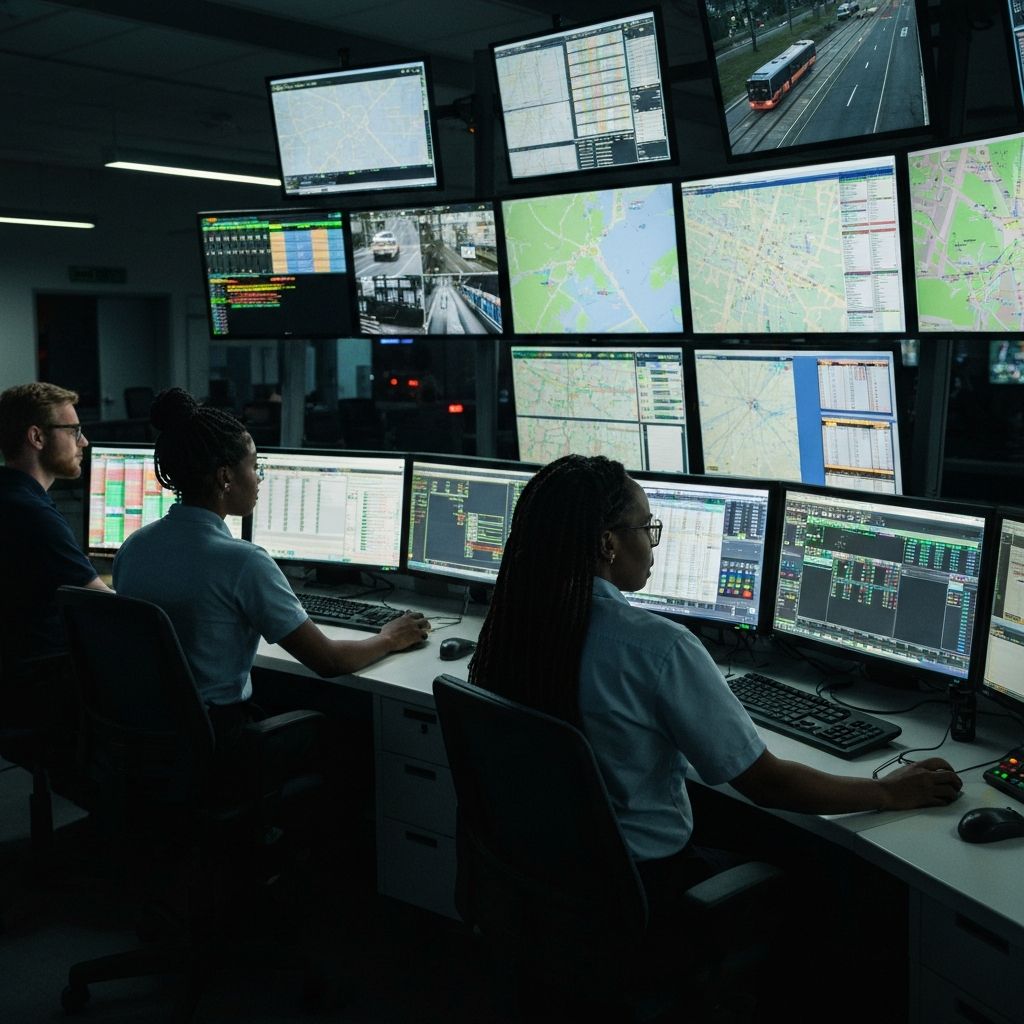
Madison Metro: Real-Time Safety Across 200+ Transit Vehicles
Madison Metro Transit
Situation
Madison Metro operates Wisconsin's second-largest transit system with 200+ buses and 50 stations. Rider safety incidents were increasing, and existing surveillance was reactive—only useful for post-incident investigation.
Friction
Transit environments present unique challenges: vehicles are mobile, connectivity is intermittent, and cameras must handle varying lighting conditions. Union concerns about driver monitoring required careful policy development.
What Changed
Coram deployed edge-based AI processing on vehicles for real-time detection even with limited connectivity. The system identifies anomalies like aggressive behavior, unattended bags, and medical emergencies, alerting dispatchers immediately.
Outcomes
- Real-time incident detection across entire fleet
- 42% reduction in on-board safety incidents
- Average alert-to-response time under 3 minutes
- Improved data for route safety optimization
Implementation Notes
- 1Edge processing handles intermittent connectivity
- 2Custom models trained on transit-specific scenarios
- 3Driver-facing cameras excluded from AI analysis per union agreement
- 4Integration with CAD/AVL dispatch systems
What to Copy
Key takeaways you can apply to your own implementation:
- Address workforce concerns proactively with clear policies
- Invest in edge processing for mobile/remote deployments
- Use safety data to inform operational improvements beyond security
- Plan for connectivity challenges in system architecture
Share this case study with colleagues evaluating video security solutions.
See similar results at your organization
Start with a no-risk pilot program.